
The #1 Thing Ruining Your Watercolor Brush Strokes
Everything about watercolor painting revolves around one thing: water!
For example, watercolor paints use a water-soluble binder so the pigments reactivate whenever water is added. Watercolor paper is designed to absorb just the right amount of water, giving you enough working time to enjoy the paint’s fluid nature while still holding the pigments in place when it dries.
Everything is designed to work with water.
The same goes for brushes…
A good watercolor brush holds a generous amount of watery paint and releases it smoothly and evenly onto the paper with each stroke.
But there’s something people often overlook:
Sometimes the most important part of watercolor painting is controlling the water on your brush.
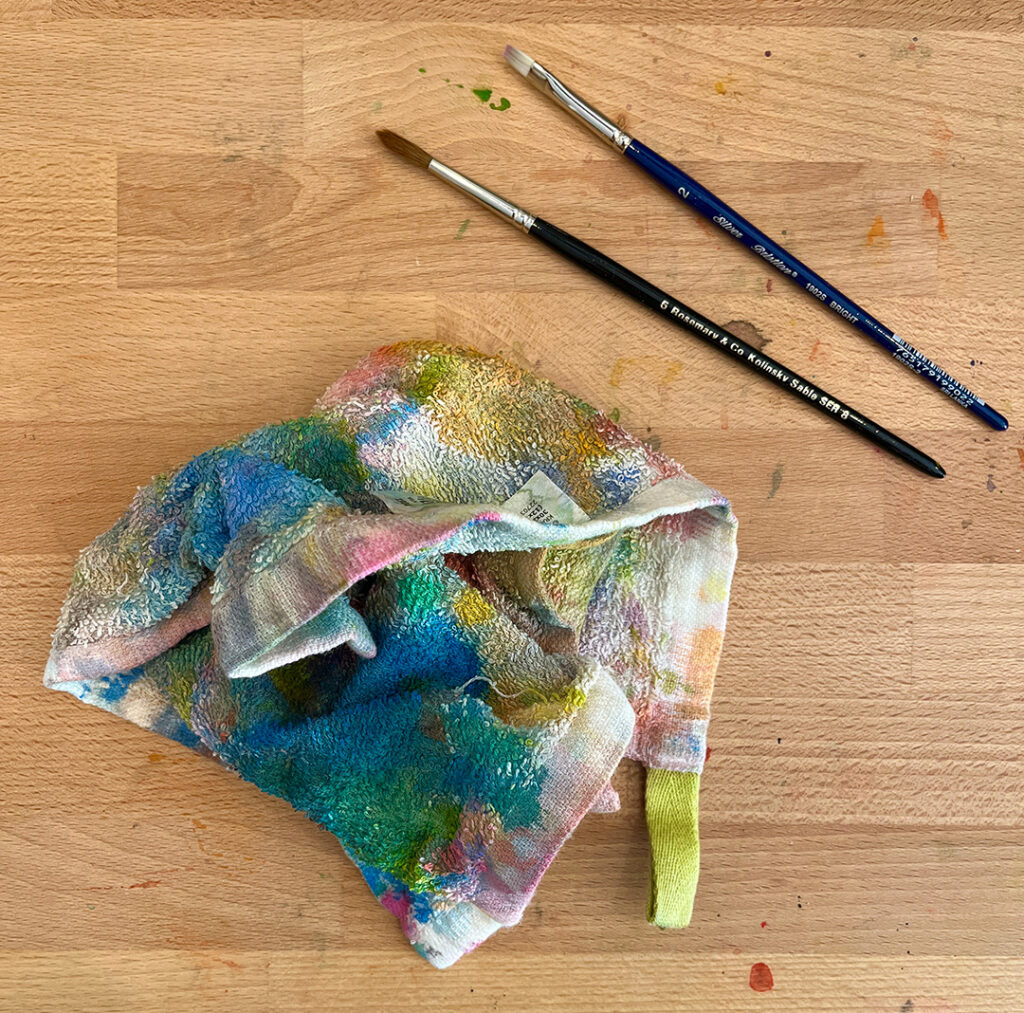
And that’s where this ugly old cloth comes in.
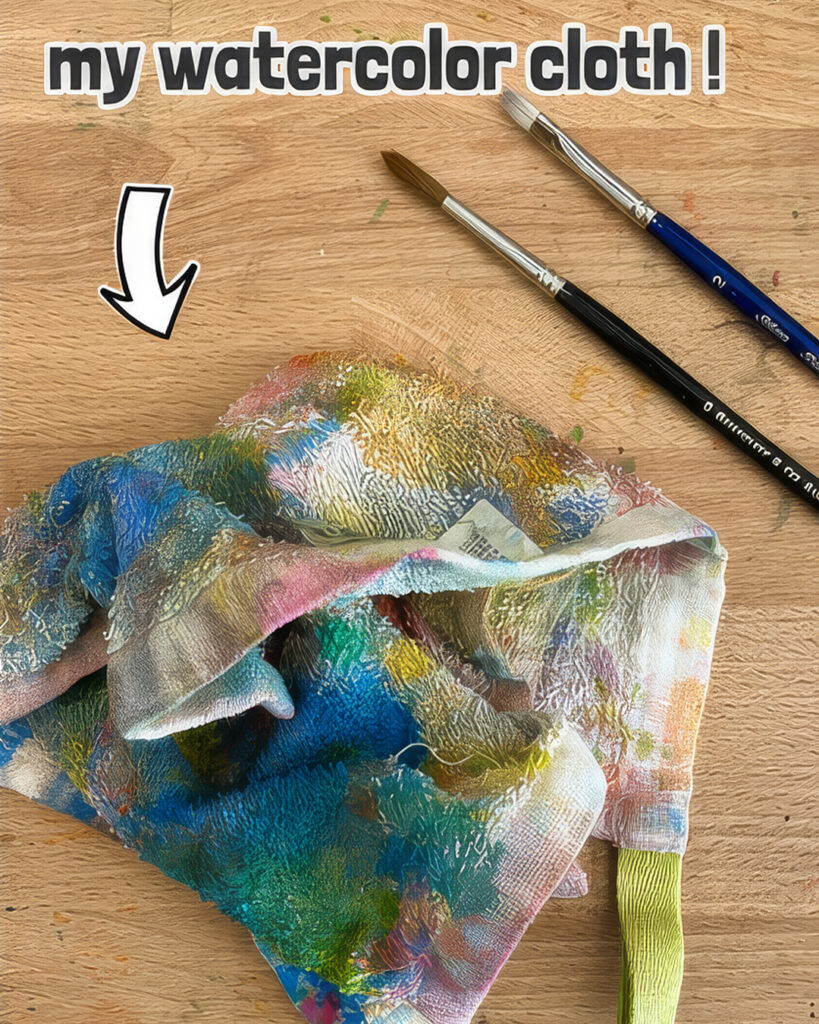
This thing is honestly one of my most-used tools. Probably the most-used tool on my desk besides the brush itself. And yes… this one probably needs replacing 😁
I’ve tried other types of cloth or sponges etc., but I find the towel-type fabric is incredibly absorbent. (So I tend to buy a few cotton wash cloths in bulk to keep the cost down and because I use them so much).
I always have one either in my left hand or sitting right beside my painting board while I work. At this point, using it has become completely automatic. I barely even think about it anymore.
The Cheapest Watercolor Tool You’re Probably Not Using
A lot of beginners flood their paper accidentally because their brush is carrying a lot more water than they realize. The moment it touches the paper, suddenly there’s a big blob of watery paint on the paper, or paint spreading everywhere, forming blooms or unexpected blotches… chaos!
But most of the time, the fix is very simple.
Just dab the brush first.
And blotting the brush actually does two important things at once.
First, it removes excess water so you can control how much moisture reaches the paper.
Second, it reshapes the brush tip into a nice sharp point.
That little blotting action is what gives you control.
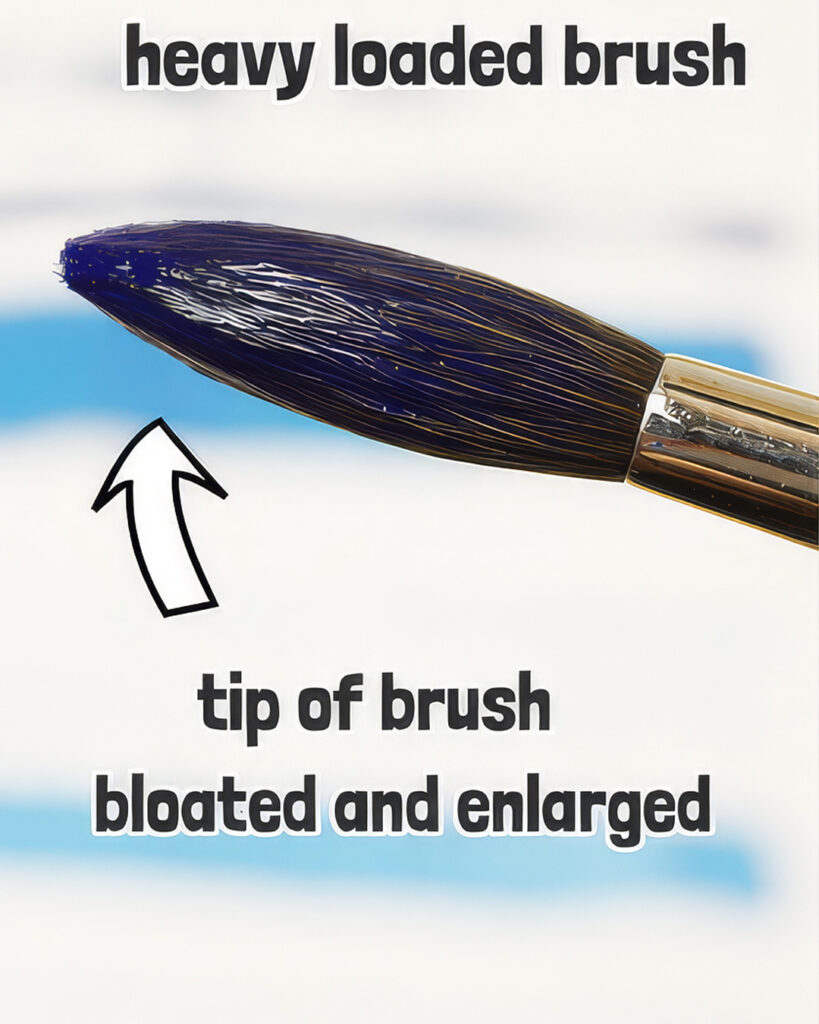
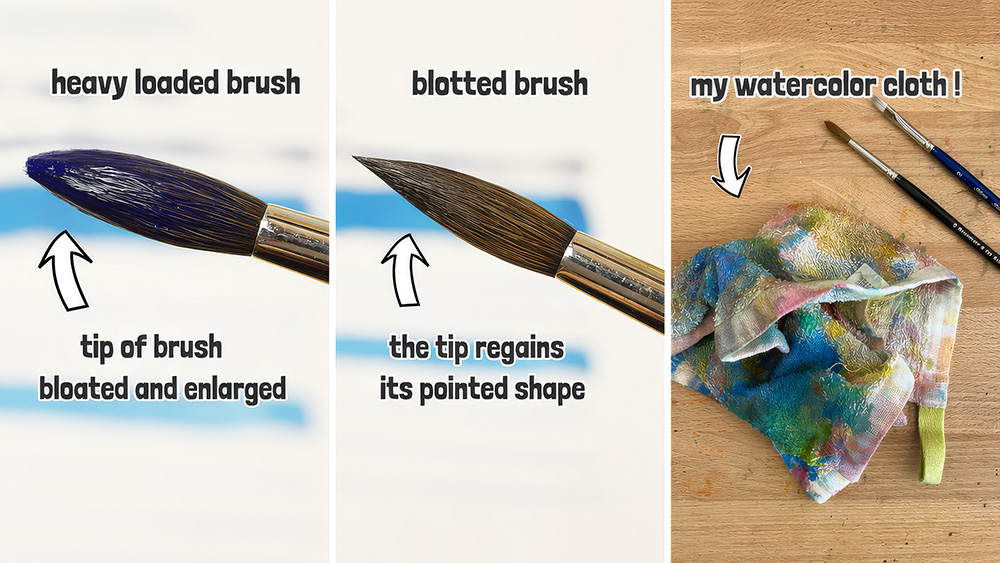
A fully loaded brush is great when you want to lay down a big, juicy wash of color. It lets the paint flow smoothly across the paper and makes it easy to cover large shapes evenly.
But if you’re trying to paint details or intricate shapes with sharp edges, that same loaded brush can suddenly become a problem.
The same thing happens when you’re painting into a damp area. Too much water and the whole wash can flood uncontrollably.
So what do you do?
You grab a cloth.
A quick dab of the brush on the cloth does two things at once. It removes excess water, which lowers the load so you’re not accidentally flooding the paper. At the same time, it pulls the brush hairs back into a sharper point, so you’re ready for more controlled, detailed work the moment you need it.
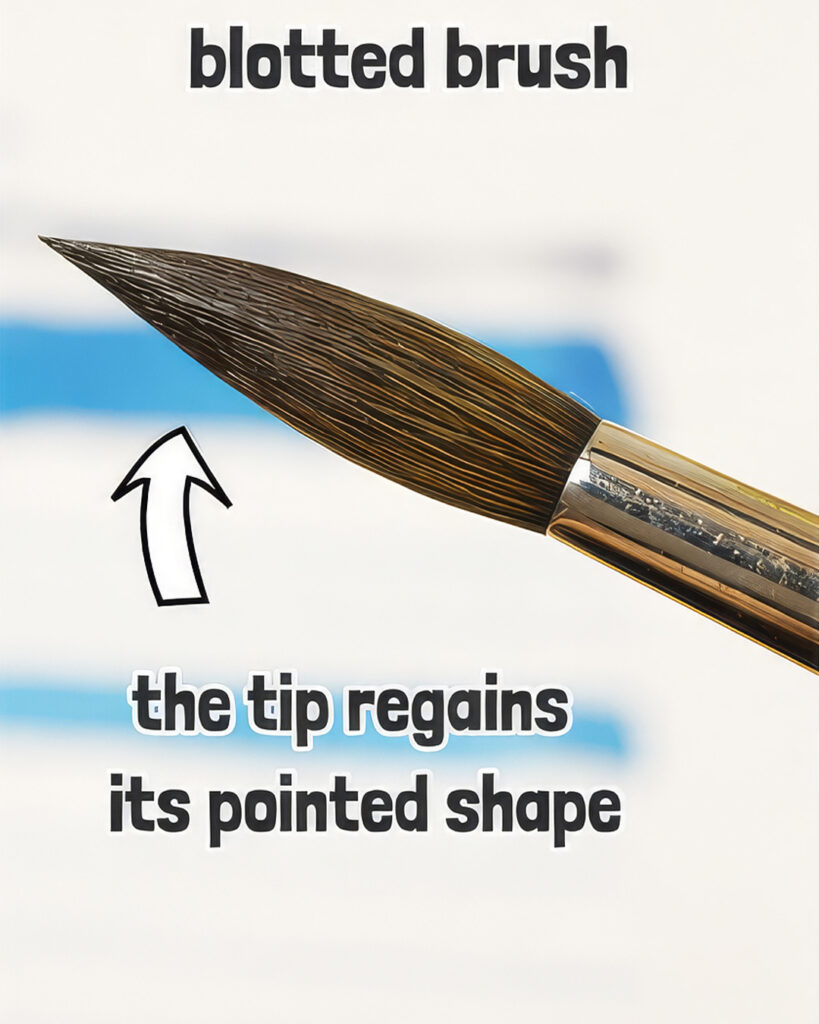
You can see the difference after blotting. The brush comes back to a much sharper point, and suddenly you have far more control over the brush mark you’re about to make.
It’s such a simple thing, but honestly, watercolor is full of simple things like this. Small habits that quietly make everything easier.
Not expensive and not complicated 🙂
Just useful.
The action of blotting is quick. If you’re new to this, you can either set the cloth next to the painting, in a place where it feels comfortable to reach during a painting session, or just hold it in your other hand.
And after a while, this little habit becomes second nature. Your hand just automatically reaches for the cloth without you even thinking about it.
It becomes part of how you paint.
And yes – before you ask – I do eventually change the cloth.
…eventually.
What’s your secret low-tech watercolor hack? Let me know in the comments 👇


Thank you Anthony!
You are such a wonderful art instructor!
Im always learning something new from you.
Im looking forward to your next lesson.
Happy to help Bonnie 🙂
Hi. Great tip! But…do you blot your brush AFTER you’ve rinsed it but BEFORE you load your paint? i.e. then loading a small amount of paint (to a dry-ish brush) if you’re working on a small area and lots of pigment for a large area? Then you have only pigment on the brush, not half the brush being water and half pigment. Thanks!
Hi Peggy
Yes, definitely. Blotting your brush before loading paint gives you more control over paint strength and moisture.
For example, if you’ve already mixed the right color and water-to-paint ratio, a very wet brush will dilute the mixture further each time you reload. A slightly drier brush picks up the same paint mixture in the palette.
My own habit is to rinse the brush clean, then wipe it against the edge of the water jar to remove excess water before loading more paint.
Hope that helps 🙂
Hi Anthony. I like how you always think of economy ( buying inexpensive washcloths in bulk). I use old worn out ones and even wash them out to use over. They are still all stained like a multicolored fabric, but they still work!
I’m enjoying your classes very much . Thank you, Sue Willisford
Good idea 👍
I so appreciate these crucial though seemingly tips you offer . Have a lifelong love of admiring watercolor work. But a lifelong struggle of understanding how it works. And I feel like you’ve told me in a few sentences more than I learned from any class I ever took. Thank you for that. You’re bringing people a great deal of pleasure into their own world simply by sharing your knowledge. I look forward to taking classes with you.
Thanks Shelly!
I’m glad this was useful 🙂